
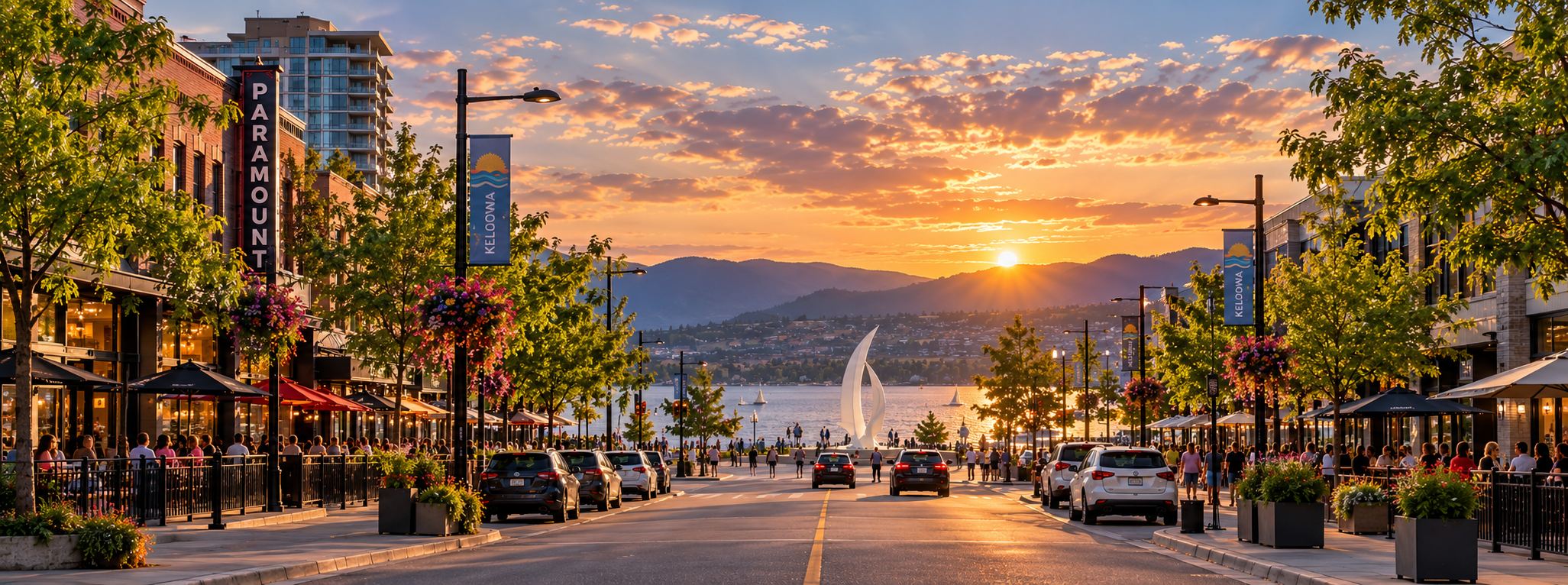
Is Crime Really Getting Worse in the Okanagan?
What the Numbers Don’t Tell You
If you live in the Okanagan, you may have noticed something that doesn’t always seem to match the headlines: crime can feel worse than the statistics suggest.
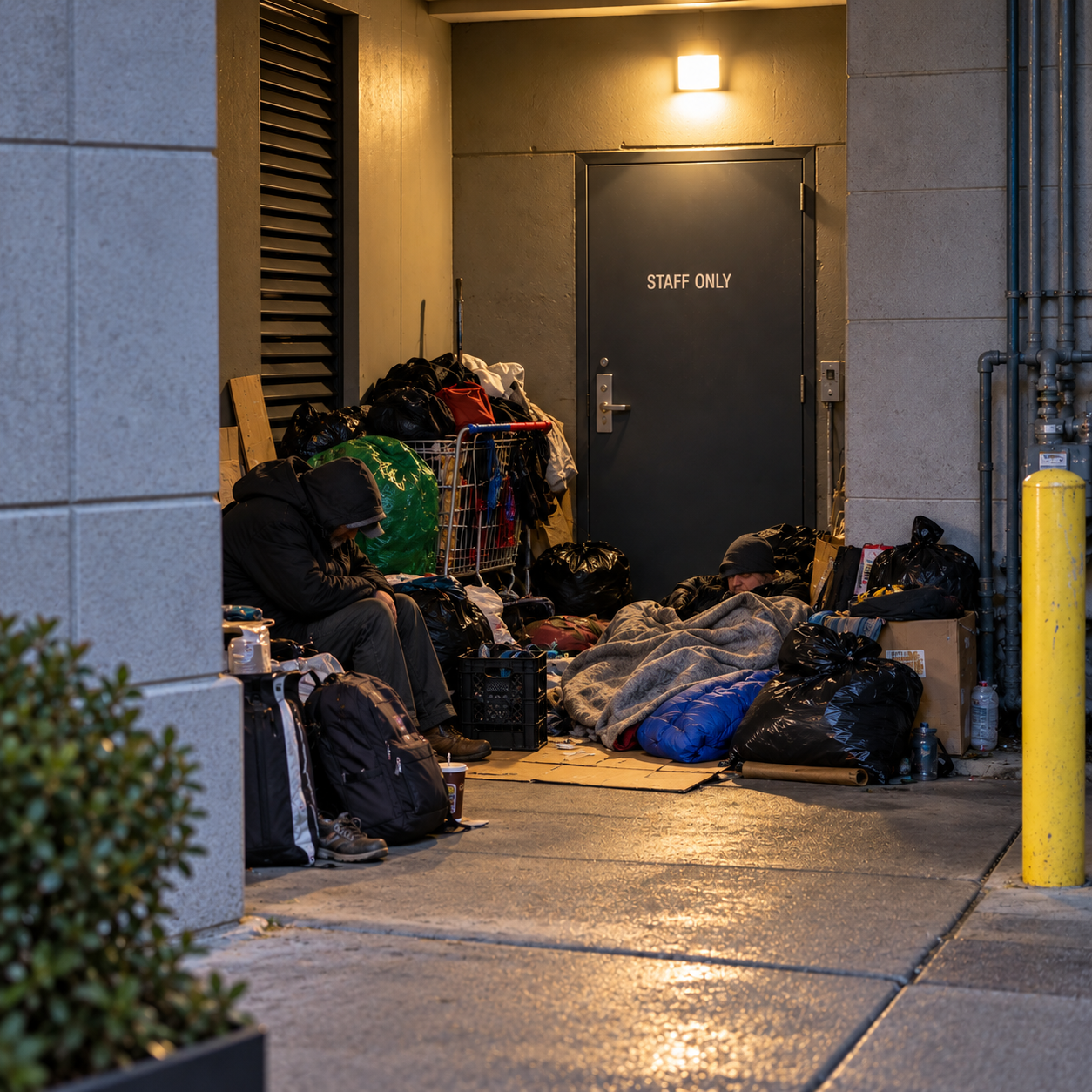
Residents and business owners often talk about more visible homelessness, street disorder, theft, vandalism, people checking vehicles and unauthorized people entering buildings.
At the same time, official crime statistics don’t tell a simple story of crime continually increasing. In fact, some categories of crime have declined. Others have increased. And that distinction is important.
The Numbers Depend on What You’re Measuring
Kelowna’s overall crime rate has been trending downward in recent years. Statistics Canada’s most recent release showed the city’s crime rate down 8.78% year-over-year, continuing a decline that has also brought Kelowna’s Crime Severity Index down from 128.0 in 2022 to 118.6 in 2023.
But looking at a single annual figure can hide what’s happening in individual categories and neighbourhoods.
An RCMP report presented in September 2025 showed that property offences in Kelowna were up 6.4% during the first half of 2025 compared with the same period in 2024. Several individual categories increased during that stretch:
Those increases help explain why some residents and business owners felt that property crime and street disorder were getting worse during that period.
However, the picture changed over the full year. The City of Kelowna’s 2025 Annual Progress Report showed that, compared with 2024:
Crime isn’t moving in one direction across every category. Some types of property crime increased during part of 2025, while several high-impact categories declined over the full year.
So Why Can It Still Feel Worse?
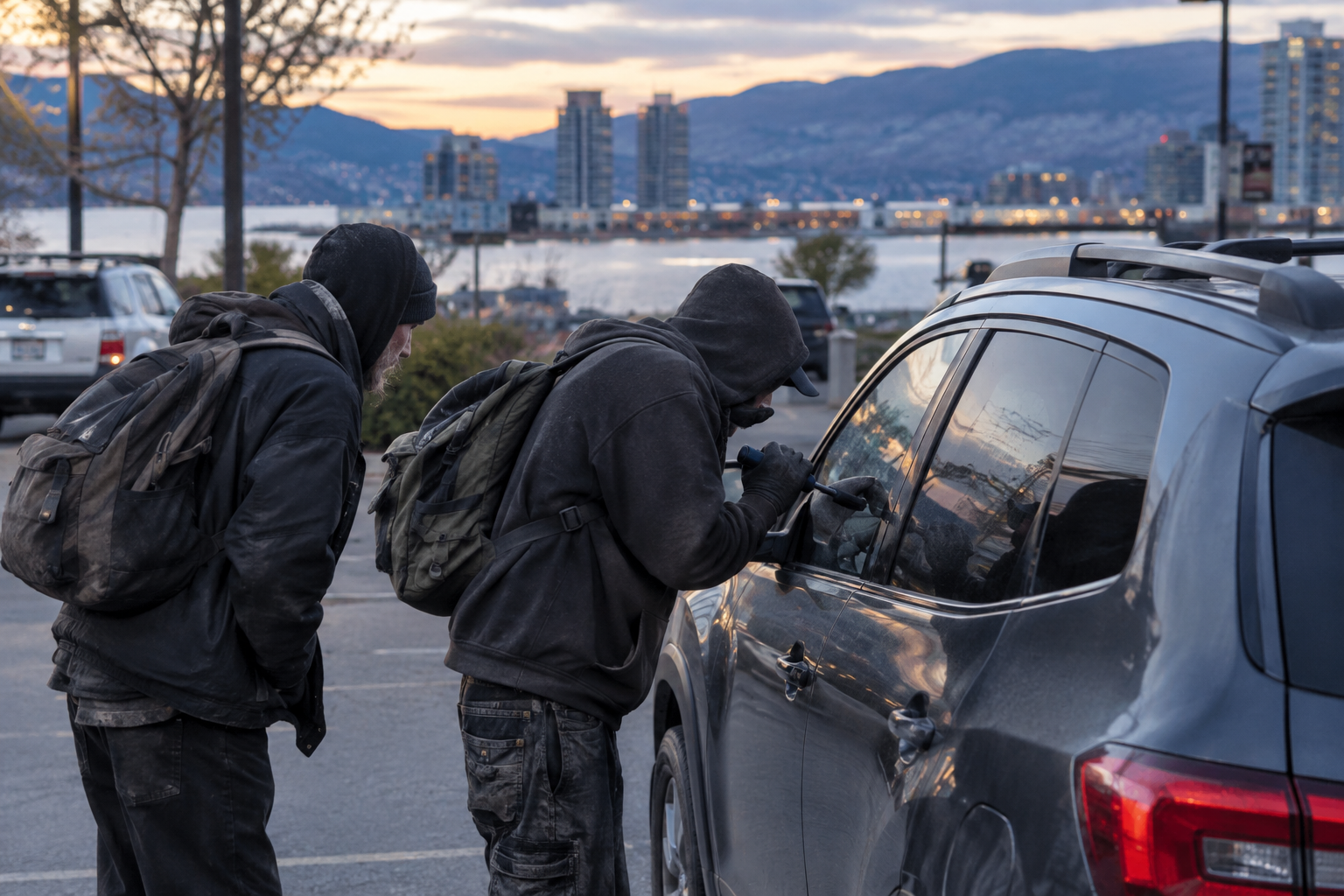
Because official crime statistics measure something different from the experience of living or operating a property in the community. A crime rate counts reported criminal incidents. It doesn’t fully capture the experience of:
Some of these incidents may eventually result in a police report. Others don’t. But they can all affect how safe people feel.
A Citywide Average Doesn’t Tell You What’s Happening at Your Property
This is perhaps the most important point. A city can have a declining overall crime rate while a particular strata building, neighbourhood or business is experiencing repeated incidents.
Imagine a parkade where residents experience a bicycle stolen, a vehicle broken into, someone entering through a garage door, storage lockers being checked, an unauthorized person sleeping in the building, then another theft a few weeks later. For the people living there, crime isn’t an abstract statistic — it’s something they’ve experienced repeatedly.
Kelowna has previously identified a significant concentration of property crime among repeat offenders. In one RCMP analysis, just 20 individuals were associated with more than 3,575 property crimes between 2020 and 2022.
That illustrates another limitation of citywide statistics: a relatively small number of repeat offenders can have a very large impact on particular properties and neighbourhoods.
Homelessness and Street Disorder Are Highly Visible
Homelessness is another important part of the conversation. The Central Okanagan has experienced a significant increase in the number of people experiencing homelessness over the past several years. The 2024 Point-in-Time count identified 404 people experiencing homelessness in the Central Okanagan.
It’s important to make a distinction: homelessness itself is not crime. Most people experiencing homelessness are not committing crimes. However, homelessness can overlap with other difficult issues, including addiction, mental-health crises, public disorder and property crime. When those issues become concentrated in particular locations, they become highly visible to the people who live and work nearby.
A resident may walk downtown and encounter several forms of disorder during a single trip. That experience can have a much greater effect on someone’s perception of safety than a statistic showing that one particular category of crime has declined.
Businesses Are Experiencing the Same Tension
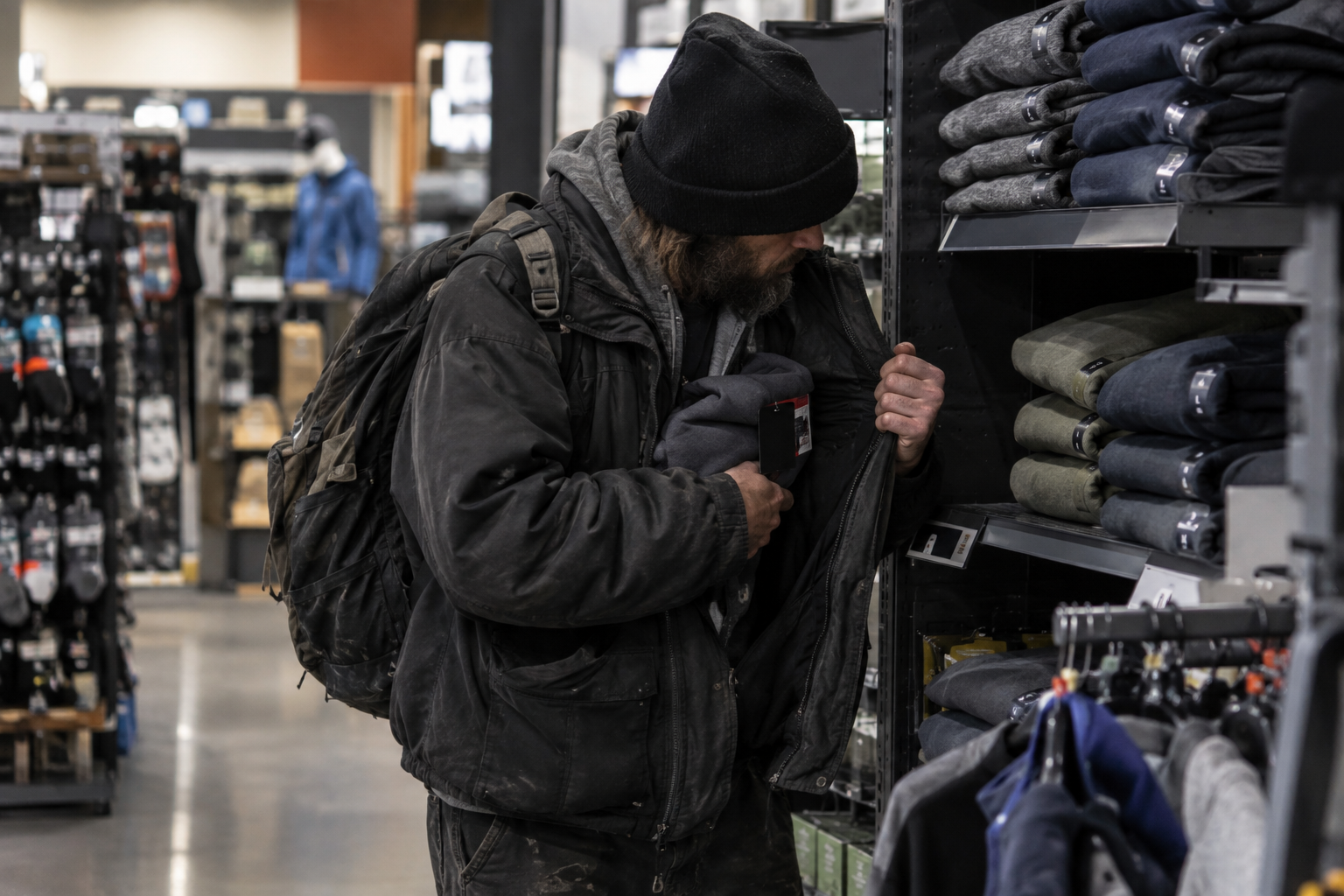
Businesses face many of the same challenges. Retail stores, offices, construction sites, hotels, warehouses and commercial properties can experience theft, break-ins, vandalism, trespassing, theft of tools and equipment, unauthorized access and overnight activity.
The concerns are significant enough that the City of Kelowna has been working directly with businesses on community safety, introducing additional measures in areas experiencing recurring overnight problems.
For a business owner, the question isn’t necessarily whether the city’s overall crime rate went up or down. It’s whether your building is vulnerable tonight.
Why Security Still Matters When Some Crime Is Declining
A reduction in a particular crime category doesn’t eliminate the risk. A 17% reduction in residential break-ins still means residential break-ins are occurring. A 16% reduction in auto theft doesn’t prevent your vehicle from being stolen. And a decline in theft from vehicles doesn’t help much if your particular building has experienced repeated incidents.
Good security is less about predicting whether crime will rise or fall next year and more about reducing opportunity and improving detection when something does happen.
Security Works Best in Layers
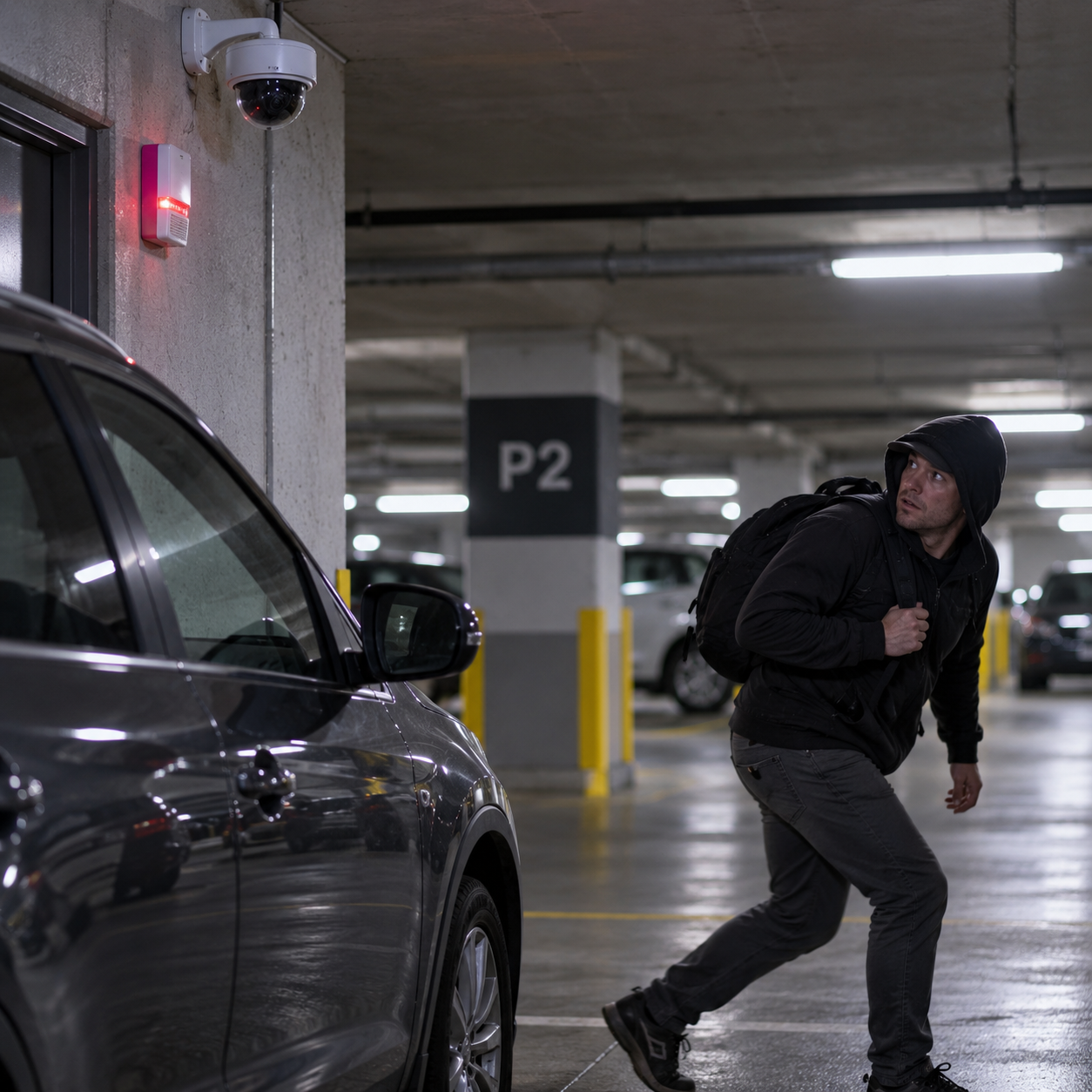
For homes, strata buildings and businesses, an effective security system usually combines several layers.
Control access
Access control systems can restrict entry to parkades, storage rooms, mechanical rooms and other sensitive areas. For strata buildings, properly managed fob systems and intercoms can help prevent unauthorized people from entering common areas.
See what’s happening
Strategically positioned security cameras can monitor parkade entrances and exits, building entrances, elevators and common areas, bike storage, garbage and service areas, construction-site perimeters and commercial entrances. Modern video systems can do more than record after the fact — they can help property managers understand what happened and, in some cases, respond while an incident is occurring.
Detect problems
Monitored alarm systems provide another layer of protection when unauthorized entry occurs. Security systems can also monitor environmental risks such as water leaks, freezing temperatures, smoke and fire conditions, temperature changes and power failures. Security isn’t only about preventing theft — it’s about protecting the property from the events that can cause significant damage.
Make security visible
Visible cameras, controlled entrances, good lighting and clearly defined access points can make it clear that a property is being actively protected. The goal isn’t to turn a building into a fortress. It’s to make it harder to enter without authorization, easier to detect suspicious activity, and faster to respond when something goes wrong.
So, Is Crime Really Getting Worse in the Okanagan?
The answer is complicated. The available statistics don’t show crime moving uniformly in one direction. Some property offences increased during the first half of 2025, including shoplifting and bike theft. Later full-year reporting showed significant declines in residential break-ins, auto theft and theft from vehicles.
At the same time, homelessness, visible street disorder and concerns about community safety remain important issues for many Okanagan residents and businesses.
The statistics tell us what has been reported. They don’t tell us exactly what it feels like when someone breaks into your parkade, steals a bicycle, enters your business overnight or repeatedly checks vehicles on your property. That’s why both the numbers and the lived experience matter.
For homeowners, strata councils, property managers and businesses, the most useful question may not be “is crime going up or down?” It may be: “How vulnerable is my property, and what can I do to protect it?”
Local Security. Local Knowledge. Local Support.
At AVS Security, we help homeowners, strata corporations, businesses and construction sites throughout the Okanagan design security systems around the risks they actually face — from cameras and alarm monitoring to access control, intercoms and environmental monitoring. Contact us to discuss your property and the options available to improve its protection.