
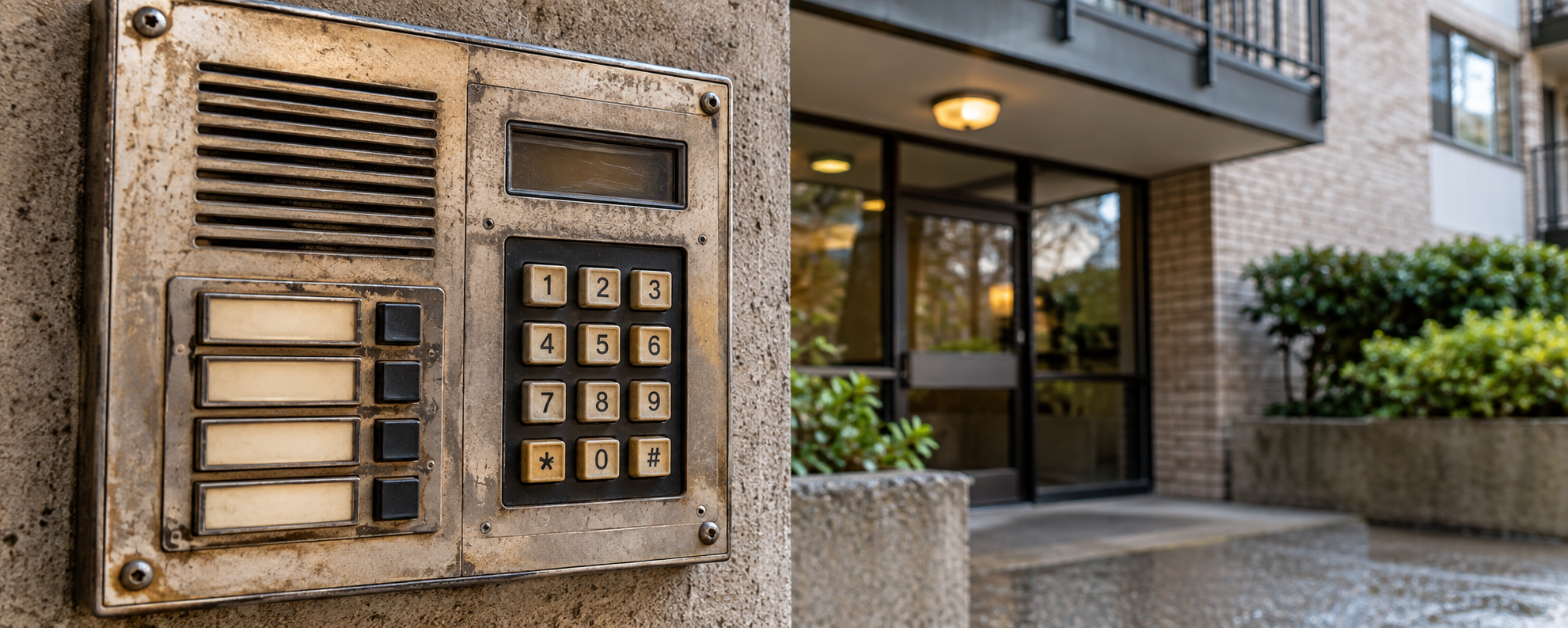
The Hidden Costs of an Outdated Security System
For Strata Councils and Commercial Property Owners
An old alarm panel or a set of aging cameras can feel like they’re saving money simply by still working. In practice, outdated security systems tend to cost strata corporations and commercial property owners more over time than the price of upgrading — it just shows up in places that are easy to overlook.
Rising Maintenance and Repair Costs
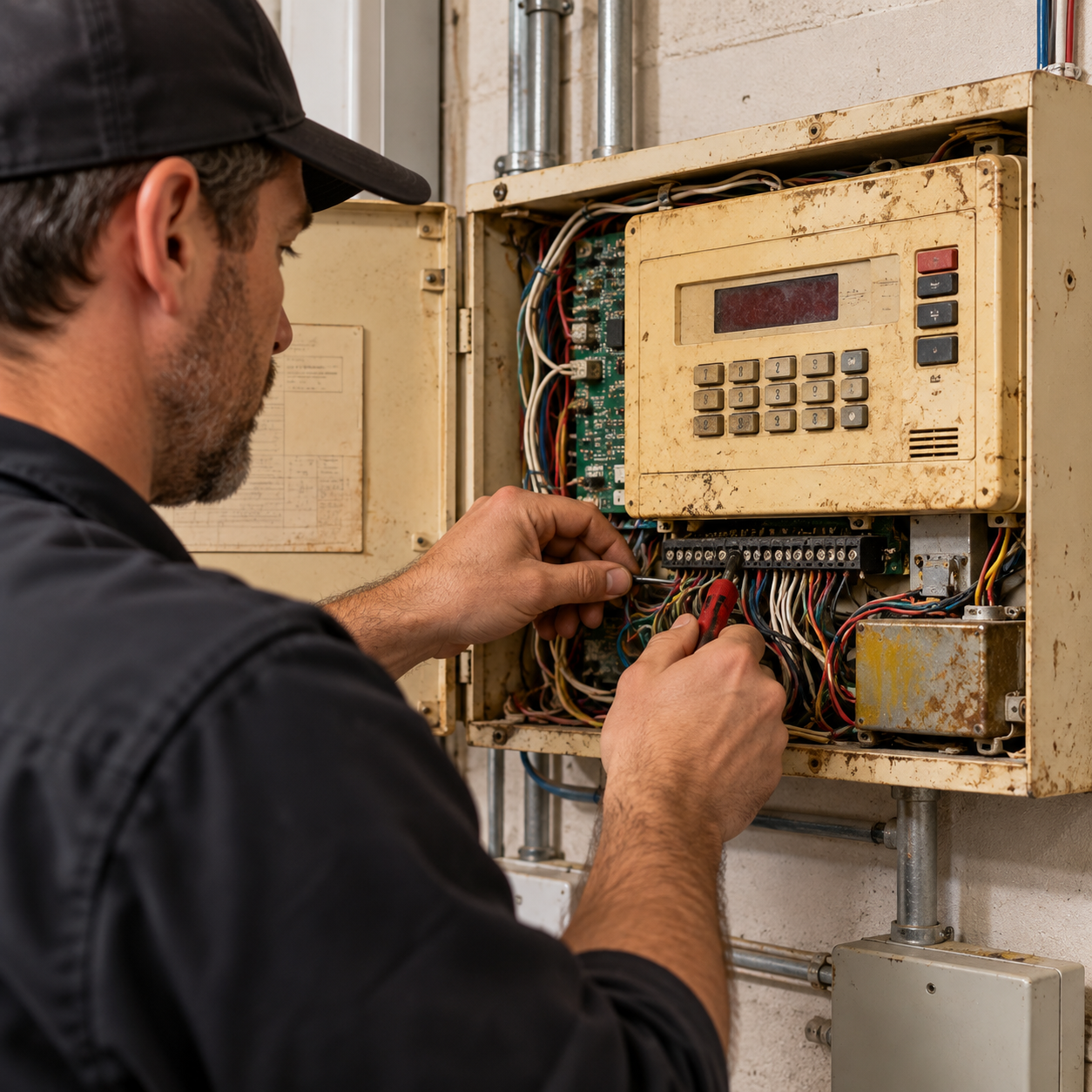
Older systems, especially proprietary or discontinued equipment, become more expensive to service the longer they’re in use. Parts become harder to source, fewer technicians are trained on obsolete platforms, and what used to be a quick service call can turn into a longer, costlier repair — or a system that simply can’t be fixed at all.
False Alarms Add Up Fast
Aging sensors and panels are more prone to false alarms, and most municipalities charge penalty fees for unverified dispatches after a certain number of incidents in a year. For a strata building or commercial property with an outdated system, those fees can accumulate quietly over a year without anyone tracking the total.
Insurance Implications
Insurers increasingly look at the condition and monitoring status of a property’s security system when underwriting commercial and strata policies. A system that’s outdated, unmonitored, or no longer meets current standards can mean a higher premium — or, in some cases, complications with a claim if an incident occurs and the system didn’t perform as expected.
The real cost of an outdated system usually isn’t the system itself — it’s the accumulation of maintenance calls, false alarm fees and insurance friction that build up quietly over the years it stays in place.
Liability When Something Actually Happens
If an incident occurs in a common area, parkade or commercial space and the existing system fails to capture usable footage or fails to alert anyone, the property owner or strata council can carry more liability than they expected. Reliable, working security isn’t just about preventing incidents — it’s part of demonstrating that reasonable care was taken if a resident, tenant or insurer ever asks.
Security Gaps You Can’t See
Older systems carry technical risk that isn’t obvious just by looking at them. Systems running outdated, unpatched firmware can be more vulnerable to tampering, and a purely hardwired system with no cellular backup can be disabled entirely if a phone line is cut — something a determined intruder can do in seconds before ever triggering an alarm. Modern systems are typically designed with cellular or IP-based communication paths specifically to close that gap.
No Remote Visibility for Councils and Property Managers

A system that only arms, disarms or reports status from a single on-site keypad puts councils and property managers in a difficult position — you either have to be there in person or rely on secondhand reports of what’s happening. Current systems let an authorized user check status, view live cameras or grant access remotely from a phone, which matters even more for a strata council or a property manager overseeing multiple sites.
Slower Response When It Matters
Older systems are also more likely to be unmonitored, or monitored through outdated communication paths that are slower or less reliable than current cellular and IP-based options. When something does happen, the gap between an event occurring and someone actually knowing about it can be the difference that matters most.
Weighing the Real Cost of Waiting
None of this means every aging system needs to be replaced overnight. But it’s worth actually adding up what an outdated system is costing — in service calls, false alarm fees, insurance implications and risk — rather than assuming that a system still running is a system still working for you.
Not Sure What Your Current System Is Really Costing You?
We’ll assess your building’s existing security setup and give you an honest picture of what it would take to modernize it — and what it’s likely costing you to wait.